Category Archives: Books

The Web Application Hacker’s Handbook

“The Web Application Hacker’s Handbook” by Dafydd Stuttard and Marcus Pinto.
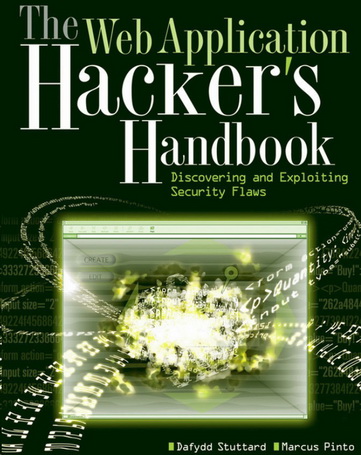
The book was written already in 2008 but points out many, still to date, common security risks that every developer should know about. Security is for most either a developers a nightmare – it is my job but I have clue –  or either an afterthought – this is not my job.

The book covers many ways your custom build website is at risk, some examples

  • Mapping the application: the structure of URI’s and parameters gives away a lot of information.
  • Bypassing client controls: the back-end should never assume a safe front-end.
  • Authentication: weak passwords.
  • Session management: the need for state introduces risks around the tokens to identify sessions.
  • Injecting code: the well known SQL injection issues.
  • Exploiting path traversal: elevating your rights as a user.
  • Application logic issues: parameterized query strings or clear text parameters that control certain business limits can easily be spoofed.
  • Information disclosure: errors that are too verbose.


CSS The Missing Manual

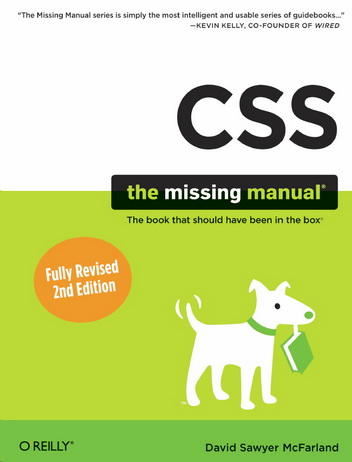
“CSS The Missing Manual” by David S. MCFarland.

The book covers:

  • CSS Basics:
    • selectors
    • style inheritance
  • Applied CSS:
    • text formatting
    • list formatting
    • margins, padding and borders,
    • graphics
    • navigation
    • tables and forms
  • CSS Page Layout:
    • Float layout
    • Absolute layout
  • Advanced CSS:
    • Print CSS
    • CSS Habbits
    • CSS3

Team Foundation Server 2012

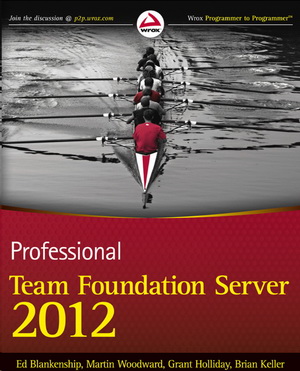
TFS is now almost 10 years in the market. For every new release Ed Blankenship, Martin Woodward, Grant Holliday and Brian Keller update their book “Professional Team Foundation Server”.

Some developers think TFS is only or equal to the Visual Studio IDE but TFS supports so much more:

  • Version control
  • Code quality assessments
  • Branching and merging
  • Project management
  • Continuous integration
  • Automated unit testing

The book covers all aspects of a software development cycle. Being a software architect and team lead this book has become a trusted companion!

Azure in Action

Great book and introduction to all aspects of Azure.

“Azure in Action” by Chris Hay and Brian H. Prince covers:

  • What is the cloud platform?
  • What are the different components and roles?
  • How to configure and subscription and the different services?
  • How to code, deploy and run applications?
  • How is Azure storage organized?
  • How to communicate with API’s and messages?

Our Iceberg Is Melting

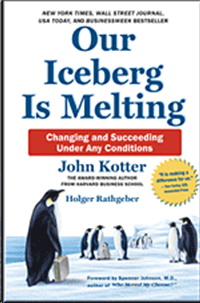
“Our Iceberg Is Melting” by John Kotter and Holger Rathgeber describes an eight-step process for organizational change.

Set the Stage

1. Create a Sense of Urgency:

Make other see the need for change and the importance to act now.

2. Pull together the Guiding Team

People with power, leadership and authority. But also people with analytical skills and communication skills.

Decide What to Do

3. Develop the Change Vision and Strategy

How will the future be different from the past. Communicate the strategy and make sure everyone understands and accepts.

Make it Happen

4. Communicate for Understanding and Buy-in

Create buy-in no only by arguments of reasons but also argument of the heart.

5. Empower Others to Act

Remove barriers and commit to actions.

6. Produce Short-Term Wins

Recognize the quiet heroes amongst the more visible.

7. Don’t Let Up

Be relentless until the vision become reality.

Make it Stick

8. Create a New Culture

Make sure people don’t get into old habits. Make the new way of doing things part of the company culture.