Category Archives: Books

Model Driven Software Migration


In his book “Model Driven Software Migration”, Christian Wagner talks about the aging software problem and what to do about it.
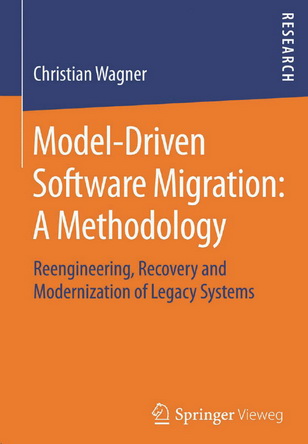
Software will age over time and may result in costly failures for organizations. Migrations happen if classical maintenance tracks start to fail.

First software life cycles are discussed:

  • Waterfall
  • Spiral
  • Continuous and Agile

Next the different types of maintenance are discussed:

  • Corrective maintenance
  • Adaptive maintenance
  • Perfecting maintenance
  • Preventive maintenance

The important trigger for migration and refactoring is design drift. The original architecture will erode over the different maintenance cycles ultimately rendering maintenance useless. At this moment software reengineering will be required. This can take different forms:

  • Retargeting
  • Revamping
  • Re-architecting
  • Redesign

Going from the old to the new can happen in diverse ways:

  • Rewrite: new technologies but new errors
  • Wrapping: exiting knowledge but old architecture
  • Migration: existing knowledge and newt architecture

Migration can use different approaches:

  • Model to Model
  • Model to Code
  • Code to Model

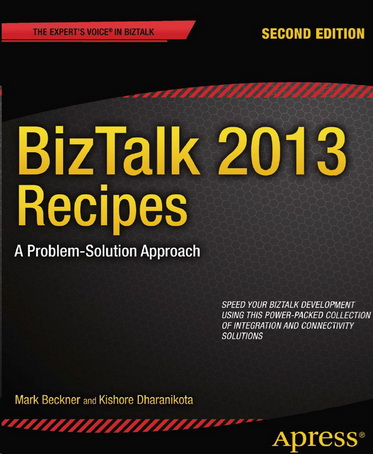
BizTalk 2013 Recipes

Great BizTalk book by Mark Beckner and Kishore Dharanikota.

In “BizTalk 2013 Recipes” they cover the full BizTalk eco-system with recipes style explanations on following topics:

  • Document schemas and mapping
  • Messaging and pipelines
  • Orchestrations
  • Adapters
  • Rules
  • EDI
  • Deployment
  • Administration
  • Business Activity Monitoring
  • Cloud aspects


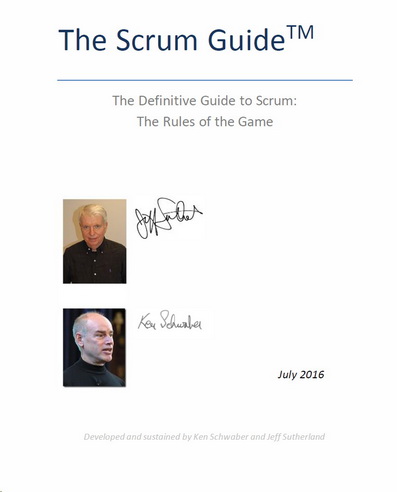
The Scrum Guide

Ken Schwaber and Jeff Sutherland wrote The Scrum Guide as manifesto for Scrum.org. It is there view on how to approach agile projects.

The document is very concise and explains scrum in all it aspects:

  • The Scrum team
  • Scrum events
  • Scrum artifacts

But don’t be mistaken it is not because the theory is easy to understand, Scrum is simple to apply and to master.

More info on:

https://www.scrum.org/

The Lean Startup

“The Lean Startup” by Eric Ries is organized around 5 principles:

  1. Entrepreneurs are everywhere
  2. Entrepreneurship is management
  3. Value learning
  4. Build – measure – learn cycles
  5. Innovative accounting

A startup is an experiment under extreme uncertainty. Most startup fails and often only the success stories make the news.

Lean startups must be managed differently. Classical management skills fail because they do not take into account the level of uncertainty in startups General management skills do not work for the two guys in the garage. Startups survive because they pivot fast: use a foundation, adapt quickly to circumstances and apply the lessons learned. Startups win through the speed they can adapt and before they run out of money.

Failures are successfully executed bad plans. You achieved to deliver on time, budget and with the correct quality something nobody wants.

To avoid the failure trap feedback cycles must go fast and must be iterate multiple times “Release early and release often”:

  1. Build ideas and measure the results.
  2. Learn from the results to generate new ideas.

Build should focus on a Minimum Viable Product (MVP). The MVP is put in front of customers as a kind of experiment and measured.

Measurements must be tripe A: Actionable, accessible and auditable. The measurements are used to tweak and improve the MVP. If the cycles show diminishing returns it is time to pivot or change the game plan.

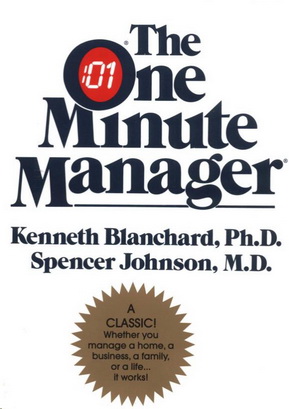
The One Minute Manager

“The One Minute Manager “ by Kenneth Blanchard and Spencer Johnson explain management according to a set of one minute tasks.

  • One minute goals
  • One minute praising
  • One minute reprimands

“People who feel good about themselves produce good results.”

“Help reach people their full potential. Catch them doing something right.”

“The best minute I spend is the one I invest in people.”

“Everyone is a potential winner. Some people are disguised as losers. Don’t let their appearances fool you.”

“Take a minute to look at your goals. Look at your performance. See if you behavior matches your goals.”

“We are not just our behavior. We are the person managing our behavior.”

“Goals begin behaviors. Consequences maintain behaviors.”