
Category Archives: Books

Connected Thinking

Industrial Internet of Things (IIoT)

Eric Schaeffer explains in his book how the industrialized world is changing and effecting the ways we should think about creating value. A lot has been written already on Industry 4.0 and to underline the fact his book is thinking beyond the next horizon, he called Industry 10 or “Industry X.0”.

I liked the ideas and examples he gave on moving from a product focused industry, over a client focused, towards a value focused industry. Consumers don’t want a product anymore they want a service and even an outcome. To repeat a well-known example: “Philips doesn’t deliver light-bulbs anymore but guaranteed illumination”.

An overview presentation of the major arguments you can find here;

The Checklist Manifesto

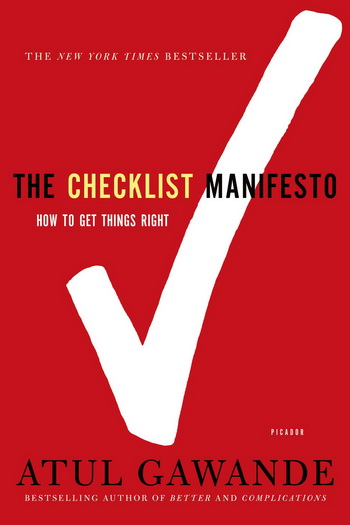
Atal Gawande wrote in 2008 a thesis on the need for checklists in hospital emergency centers. His idea was that deadly mistakes were made not because people were not trained but because people didn’t apply rigorously what they know.

The thesis became the basis of the book “The Checklist Manifesto

Although the focus of Gawanade is the medical field, the knowledge can be expanded to other fields as well.

A good overview on the lessons learned you can find under: http://www.everup.com/2016/01/25/about-the-checklist-manifesto-atul-gawande-takeaways/

Some takeaways:

  • Checklists are used by successful people to eliminate mistakes.
  • Checklists are not step-by-step procedures and must be kept short
  • The activities must be described in a clear language that does not allow for any interpretation by the user of the checklist
  • Checklists must contain milestones. These are the places where checks can be stopped and the list activities can be taken up again.
  • The proof of the pudding is in the eating. Checklists must be reevaluated regularly. Revise after feed-back cycles.
  • Involve experts in user experience design to optimize layout and formatting of the checklist.

The Passionate Programmer

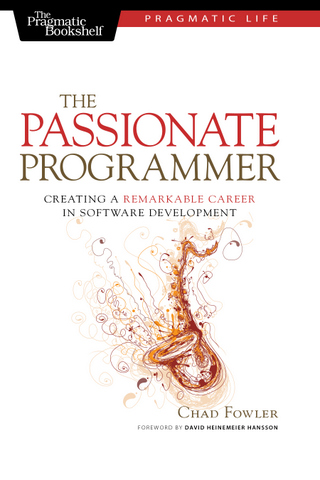
In the Passionate Programmer,  Chad Fowler describes ways you can have “a remarkable career in software engineering.”

He organizes the advice using 5 axes:

  • Choose your market
    • You lead or you bleed. You need to find your competitive advantage and cultivate it.
  • Invest in your product
    • Learn from the best and mentor the rest.
  • Execute your daily strategy
    • Focus on what you can realize in a day and deliver something every day
  • Market yourself
    • Translate your knowledge in c-speak and speak up in your field of expertise
  • Maintain your edge
    • Skills age very fast so make sure you learn and improve your knowledge every day

Architecting the Internet of Things

Some highlights from the “Architecting the Internet of Things” by Dieter Uckelmann et al.

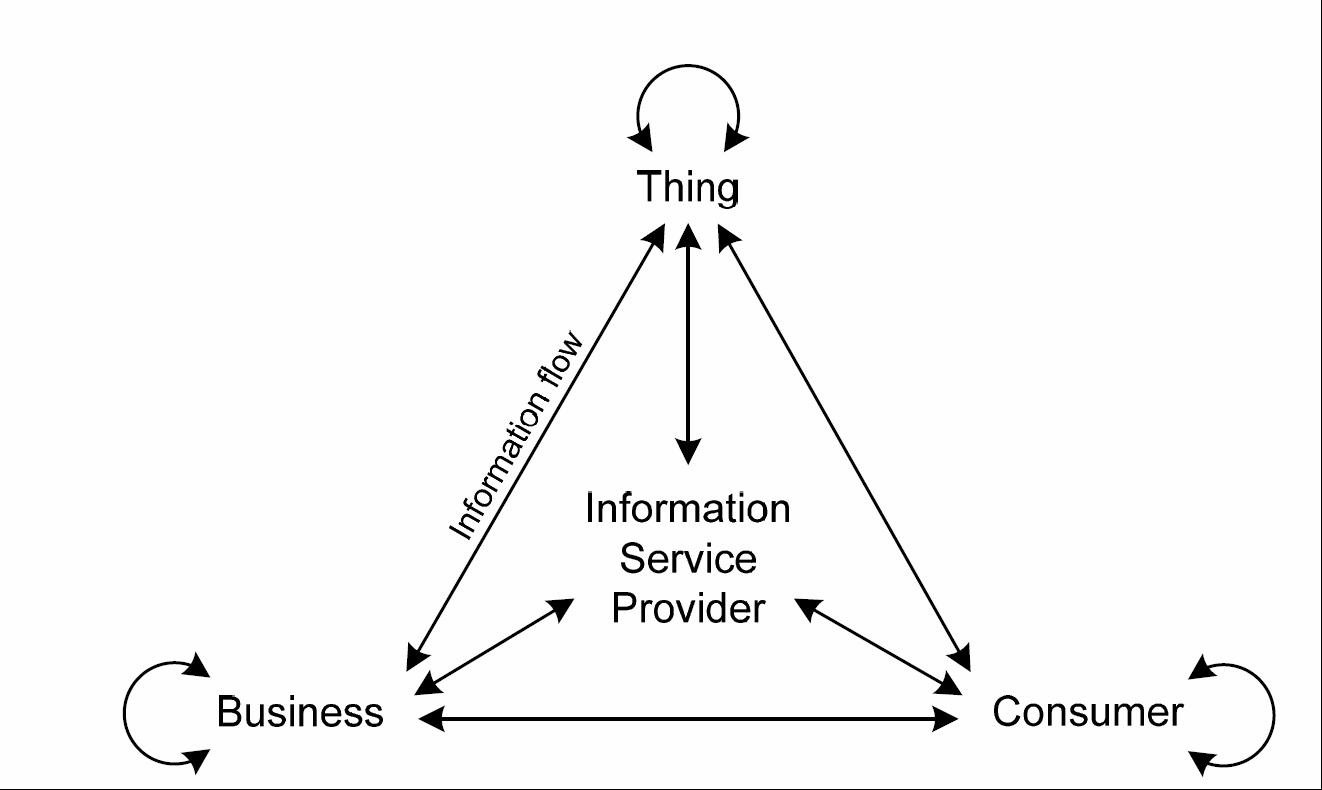
IOT requires an open, scalable, secured and standardized infrastructure to allow for person to object and object to object communication. As the cost of infrastructure goes down the amount events that can be tracked through sensor data will increase resulting in deep immerging of technologies in our day to day live.

IOT evolved and is evolving:

  1. Intranet of things
  2. Extranet of things
  3. Internet of things
  4. Internet of things and people

How to create web 2.0 or the social web? It is al about sharing: sharing becomes the norm. The financial and non-financial incentives of sharing according to the laws of information:

  • Information can be shared with other without it losing its vale.
  • The value of information increases with it use. Unused information does not provide any value.
  • Information is perishable and the value decreasing over time.
  • The value of information increase with its accuracy.
  • The value of information increase with it is combined with other information.
  • More information is not necessary better. Relevant information is.
  • Information is not depletable.