Category Archives: Uncategorized

Why Software Modernization is Inevitable!

CxO’s often ask why didn’t we see this coming when their LOB applications start to break down. The easy answer is you overlooked inherent aspects of the software development life cycle (SDLC).

Software has a natural tendency to age over time. At a certain moment, incremental maintenance projects will make no sense anymore and modernization programs are investible.

Software is subject to the laws of Maintenance Crisis:

  • Software matures through usage: running in a production environment the smallest remaining bugs will be found over time.
  • Law of continuous change: change will make software progressivity less useful over time until the cost for maintenance is greater than the cost of replacement.

  • Changes introduce more complexity as structure (architecture) will deteriorate over time: unless the structure is changed or complexity is lowered.

Continue reading →

Share this postSave this post

Introduction to Microsoft Hololens

Hololens

As with  all new technologies the question is often “if” and “when” to use to avoid answering the wrong question: “Technology is searching for a problem to solve” instead of “Problem was solved by applying a suitable technology”.

In this introduction presentation I focus first on explaining what Virtual Reality (VR), Augmented Reality (AR) and Mixed Reality (MR) is. Next we zoom in on the Microsoft HoloLens device and how it can be used in some canonical use cases. To conclude some attention is paid to the development aspects of HoloLens applications and the toos involved.

Presentation’s content:

  • Virtual Reality and HoloLens
    • Defining Virtual Reality
    • HoloLens Device Overview
    • HoloLens Holographic Principles
  • Demo 1
  • Using HoloLens
    • HoloLens Use Cases
    • HoloLens Team Collaboration
  • Demo 2
  • Developing for HoloLens
    • Development Teams
    • Development Tools
  • Q&A and Hands-On

Download the presentation:

Share this postSave this post

Microsoft going Cuckoo sorry Coco for Blockchain and eDiscovering GDPR regulation!

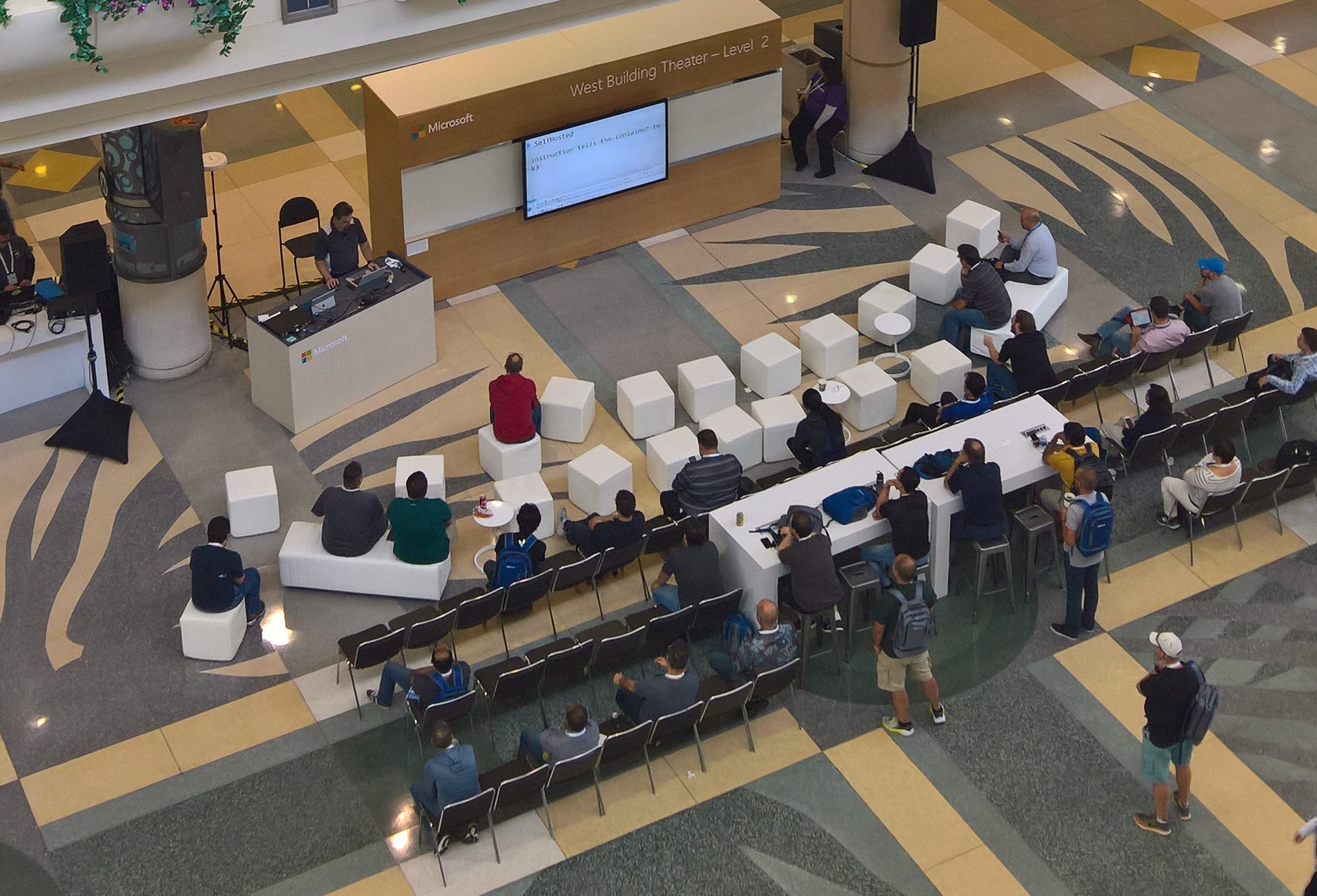
The fourth day of MS Ignite 2017, I followed some more sessions on security related topics. The focus was on Blockchain and some more on GDPR regulation.

With regards to Blockchain it is clear that in current economies people are trying the remove the middleman. In the commercial world this means lawyer and banks. Banks can be replaced by crypto-currency and lawyers by intelligent contracts. So Blockchain is seen by these middlemen as disruptive breaking down expensive systems that had sometimes not a lot of added value. The response is either fear or greed driven. Fear by pointing to the risks and complexity of trusting systems to deal with objects of potential high financial value. Greed is where middleman reluctantly abandon their position as their monopoly is broken down.

When getting into Blockchain the industry is demanding solutions to organize proof of concepts in such a way they can fail fast and cheap if things would not work out. To support this MS offers SaaS solutions that can be kept private i.e MS Coco Framework. In general, Blockchain environments fall into two categories. Either some public Blockchain offering is used running under the bonnet. Either a private Blockchain is used and participating members treat this as a trusted third party.

Continue reading →

Share this post

Save this post

Microsoft tools assure your sensitive data is safe!

During the third day of MS Ignite 2017, I looked for sessions focusing on security.

In the data protection paradigm, we see MS supporting GDPR compliance by a new tool for SQL Server. It should be obvious for every company that client sensitive data needs to be protected. No company wants the reputational or financial harm a data breach can result to. But the numbers tell different. On a yearly basis 2 billion records are lost which boils down to a staggering 5 million a day. No wonder we distrust companies and the EU started regulating this topic as apparently self-regulation in industry failed.

MS created a model and tooling to support clients to achieve GDPR compliance. The model is a simple 4 step approach going form 1. discover and 2. manage over 3. protect to 4. report. To achieve general GDPR compliance a company must:

Continue reading →

Share this post

Save this post